Posted on 22-12-2023 by thartog@stramark.nl
Freesia summary
| Height: |
40-60cm |
| Spread: |
20cm |
| Period for planting Freesia bulbs |
March to April |
| Freesia corms flowering period |
June to August |
Freesia corms planting instructions
Well-drained soil
Planting Freesia bulbs is easy. Freesias prefer light, well-draining soil. If puddles of water remain 5-6 hours after a hard rain, find another site. Alternatively, amend the soil by adding organic material to raise the level 2-3 inches, which will improve the drainage. Peat moss, compost, ground bark or decomposed manure all do the trick and are widely available.
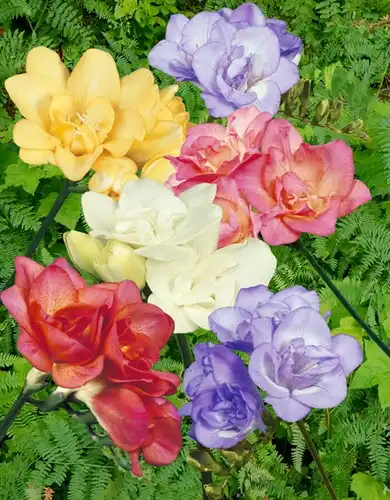
Pointed end upwards
Dig holes and plant your freesia bulbs 2 inches deep and 3 inches apart. The bulbs look like small, slim onions. Plant them with the pointed end facing upwards.
Location for planting Freesia bulbs
When planting freesia bulbs, position them in a spot where they will receive full sun during the day.
When to plant freesia bulbs
The best period for planting Freesia bulbs is around March and April. Fresia will flower between June and August.
Freesia maintenance instructions
After planting, water your freesias well, soaking the area thoroughly. Roots and sprouts will develop in the autumn. Taller growth will begin in winter and flowers will appear in the spring.
Ideal for cutting bouquets
Once in bloom, feel free to cut freesia flowers for indoor bouquets. This will not damage the plants, and having fragrant blooms to bring inside is one of the best reasons to grow freesias.
Leave foilage in place untill late summer
After your freesias have finished blooming for the season, leave the foliage in place; don't cut it off. The leaves will continue to gather sunlight and provide nourishment for next year's display. Water your freesias as necessary.
Later in the summer, the leaves will yellow and die back as the plant retreats into dormancy. Foliage can be removed at this point. Your freesias will then rest for a few months before starting the next growing cycle.
Our freesia corms, as well as all our other products, are delivered with detailed planting instructions.
Start planting Freesia bulbs today!
Click here to see out collection of Freesia
Buy Freesia bulbs?