Posted on 22-12-2023 by thartog@stramark.nl
Fritillaria summary
| Height: |
30-150cm |
| Spread: |
5-45cm |
| Period for planting Fritillaria bulbs |
August to September |
| Fritillaria bulbs flowering period |
April to May |
Planting Fritillaria bulbs - instructions
Well-drained soil
Planting Fritillaria bulbs is easy, rewarding and will give you great flowers. Plant your fritillaria bulbs in sandy or medium loamy, well-drained soil for best results. Generally, fritillarias grow well in any type of garden soil, but they grow best in a moist swampy soil in an open garden, and can be easily cultivated in a relatively fertile soil. Fritillarias also perform well in fairly arid soils and, when mature, will tolerate drought.
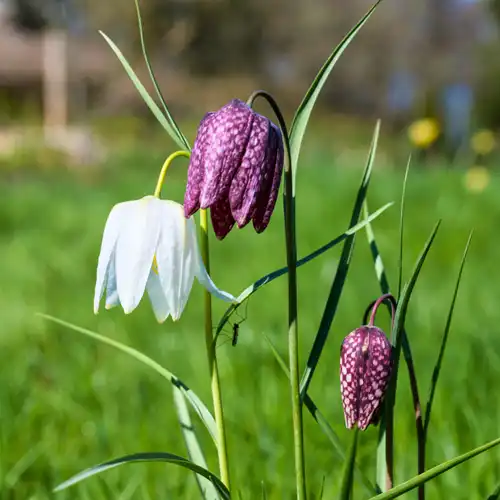
How to plant Fritillaria bulbs
It’s best to plant the rough and peeling fritillaria bulbs on their sides, or surrounded in sand, to prevent water from accumulating in their hollow tops. Plant them 4 to 5 inches deep and 6 inches apart.
Location for planting Fritillaria bulbs
A lightly shaded and sheltered location is ideal for cultivating fritillarias, but they will also tolerate full sun.
When to plant Fritillaria bulbs
The best period for planting fritillaria bulbs is between August and September. The bulbs will be flowering around April and May.
Fritillaria maintenance instructions
Fritillarias don’t need too much attention once planted. You should remove the flower heads after the blooms have faded and before it goes to seed. Allow the foliage to wither naturally each year, as this will allow the bulbs to replenish in preparation for next year’s display. Water your fritillaria often and generously in the spring until after it flowers, then hold back on water in the summer. Fritillaria is a great choice for areas with dry summers.
Enjoy your Fritillarias again next year
Fritillarias are one of the easiest flowering bulbs to grow, as the bulbs reproduce year after year. Fritillarias are propagated by division of bulbs in the autumn. Divide the bulbs in autumn and replant them straight away. Offshoots of the fritillaria bulbs are widely used to propagate these plants. Our fritillaria bulbs and all our products are delivered with detailed planting instructions. Want to start planting Fritillaria bulbs in your Garden.
Click here to check out our full collection of Fritillaria
Buy fritillaria bulbs?